
Part 1 - Sleep
Why you're exhausted but can't sleep...
The Hidden Battle Happening in Your Brain Every Night
It’s 11pm.
You’re exhausted.
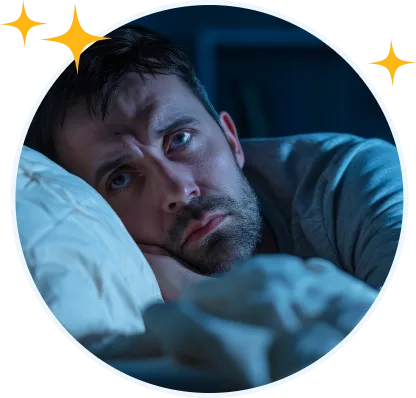
You’ve been looking forward to bed all day. The children are asleep. The dishes are done. The house is finally quiet.
You slide beneath the duvet, close your eyes and wait for sleep to arrive.
But instead…
Your brain decides now is the perfect time to review that awkward conversation from three years ago.
- Or remind you about tomorrow’s meeting.
- Or wonder whether you locked the back door.
- Or start mentally redecorating the kitchen.
Sound familiar?
If you’ve ever felt utterly exhausted but somehow unable to sleep, you’re far from alone. One of the most frustrating experiences people describe is feeling physically tired whilst their mind seems determined to stay wide awake. The surprising thing is that this isn’t a lack of sleep problem. It’s often a brain state problem.
Whats happening inside your brain?
You’re Exhausted But Can’t Sleep…
When we’re relaxed and ready for sleep, the brain gradually shifts into slower, calmer patterns of activity. The nervous system moves from “doing” mode into “restoring” mode. Heart rate slows, breathing becomes more regular, and the body begins the important work of repair and recovery.
However, when the brain detects stress, uncertainty or unresolved concerns, it can remain on high alert even when your body is desperate for rest. From an evolutionary perspective, this makes perfect sense. Thousands of years ago, staying alert in the face of potential danger kept us alive. If our ancestors heard rustling outside their shelter, it wasn’t useful for them to roll over and drift back to sleep. Remaining vigilant increased their chances of survival.
Unfortunately, your brain doesn’t always distinguish between a hungry predator and tomorrow’s overflowing inbox.
Both can trigger the same stress response.
Why modern life keeps the brain switched on
Today’s threats are rarely life-threatening, but they are often constant.
Work deadlines.
Financial pressures.
Family responsibilities.
Relationship worries.
The endless stream of information available through our phones and devices. Many of us spend our days moving from one task to another without ever giving our minds a chance to fully process what we’ve experienced.
Then bedtime arrives. The distractions disappear. Everything goes quiet. And suddenly, all the thoughts that have been pushed aside throughout the day come rushing to the surface.
It’s not that your brain is broken. In many ways, it’s trying to protect you by solving problems and preparing for the future. The difficulty is that bedtime isn’t the ideal time for problem-solving. Your brain hasn’t received the message that it’s safe to switch off.
The sleep anxiety cycle
After a few difficult nights, many people begin to worry about sleep itself.
They start monitoring how many hours they’ve had.
Calculating how tired they’ll feel tomorrow.
Wondering whether they’ll cope if they don’t sleep.
Ironically, this anxiety about sleep often becomes part of the problem.
The harder we try to force sleep, the more elusive it becomes.
You may recognise thoughts such as:
“I must get to sleep.”
“If I don’t sleep now, tomorrow will be a disaster.”
“What’s wrong with me?”
The intention behind these thoughts is understandable.
But the effect is often the opposite of what’s needed.
Instead of calming the nervous system, they increase alertness and pressure.
The importance of self-compassion
Many people become incredibly critical of themselves when they struggle with sleep.
They believe they “should” be able to switch off.
They compare themselves to partners who seem to fall asleep within minutes.
They worry that they’re somehow doing sleep incorrectly.
Yet the truth is that occasional sleep difficulties are part of being human.
Periods of stress, change and uncertainty can all influence how well we sleep.
Responding with kindness rather than criticism can help reduce the additional layer of pressure that often develops around bedtime.
How hypnotherapy can help
Hypnotherapy helps calm the nervous system and retrain the unconscious patterns that keep the brain alert at bedtime.
Rather than fighting against your mind, it works with the brain’s natural ability to learn new responses.
Over time, the unconscious mind can begin to associate bedtime with safety, relaxation and restoration rather than vigilance and worry. Many people also discover that addressing the underlying stressors contributing to their sleep difficulties can make a significant difference.
Rather than simply focusing on the symptom of sleeplessness, hypnotherapy can help build resilience, improve emotional wellbeing and support healthier thinking patterns. And that’s where many people discover the real issue isn’t simply tiredness. It’s the thoughts that arrive when everything finally goes quiet.
If you’re exhausted but unable to sleep, know that you’re not alone, and you’re certainly not failing.
Your brain may need support in remembering that nighttime is a place of rest rather than responsibility.
Ready to retrain the unconscious patterns that keep the brain alert at bedtime?
Book a free 15-minute discovery call to find out how hypnotherapy could help you improve your sleep